
Blue Crab
Callinectes sapidus
An iconic East and Gulf Coast species, Blue Crab is celebrated for its sweet, delicate, slightly nutty meat—especially from the body and prized jumbo lump sections. It’s the backbone of crab cakes, steamed crab feasts, and a wide range of regional dishes from Maryland to Louisiana.
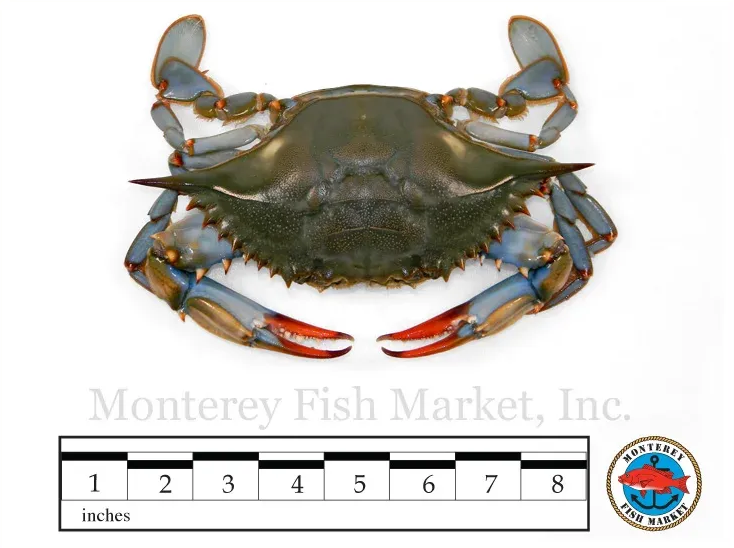
Range
Gulf of Mexico to Maryland
Method of Capture
Trap
Seasonality
Hardshell: August to May
Size Range
3.5 - 5.5 inches
Sustainability Consideration:
Blue Crab is closely managed at the state and regional level, with size limits, seasons, and gear rules designed to protect spawning crabs and keep stocks healthy over time. Some areas have rebounded strongly after past declines, while others are still watched carefully.
Monterey Fish Market focuses on responsibly managed fisheries and reputable processors—paying attention to where crabs come from and how they’re harvested—so Blue Crab remains a long-term, sustainable choice.
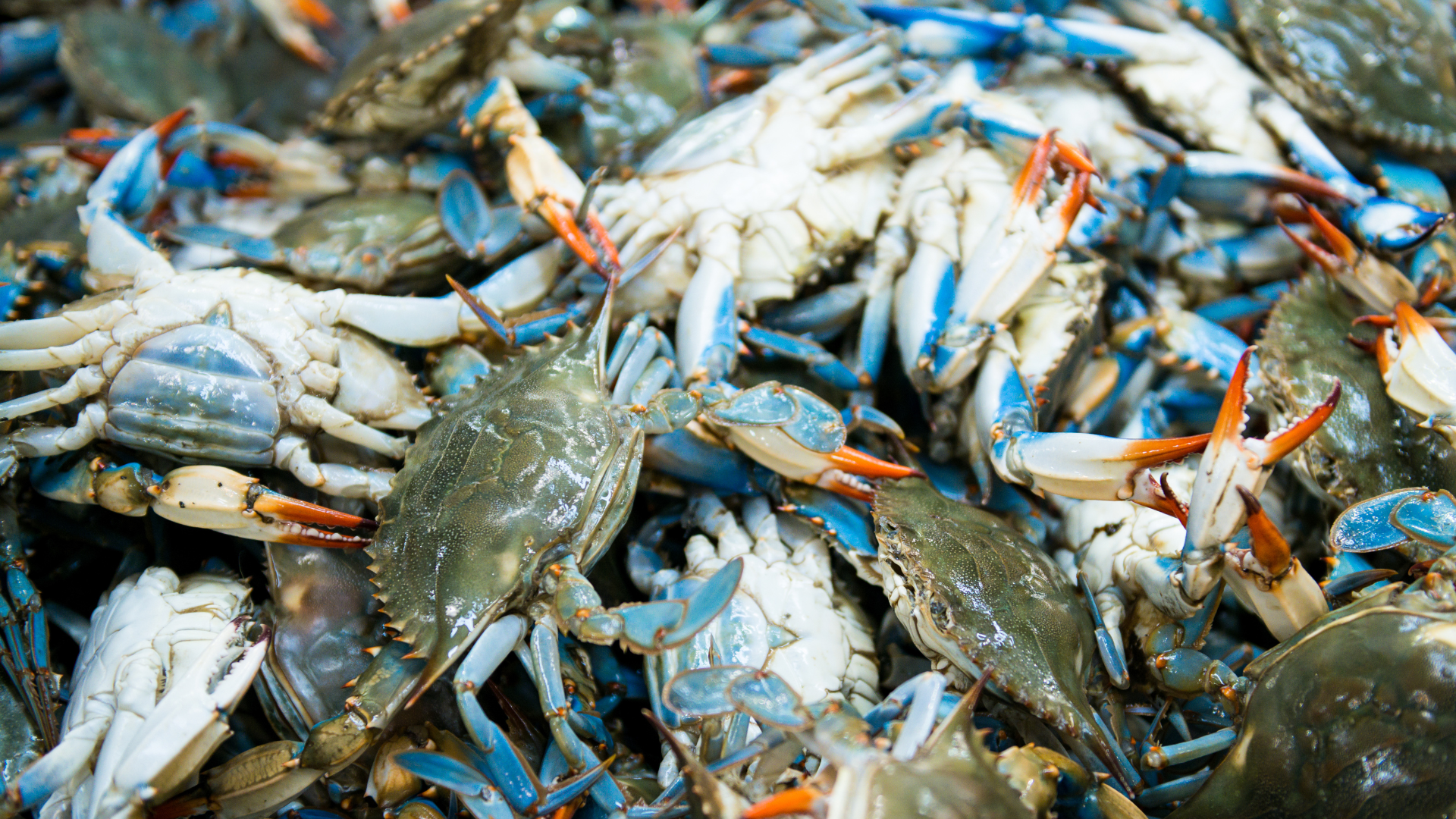
Flavor & Texture:
Blue Crab is beloved for its sweetness and delicacy:
- Flavor: Sweet, mildly briny, and slightly nutty, with very clean, pleasant crab character
- Texture: Lump and jumbo lump: large, tender, distinct pieces; Backfin: flaky and delicate; Claw: darker, more robust flavor, slightly firmer
That range of textures and intensities makes Blue Crab meat useful across a wide variety of dishes.
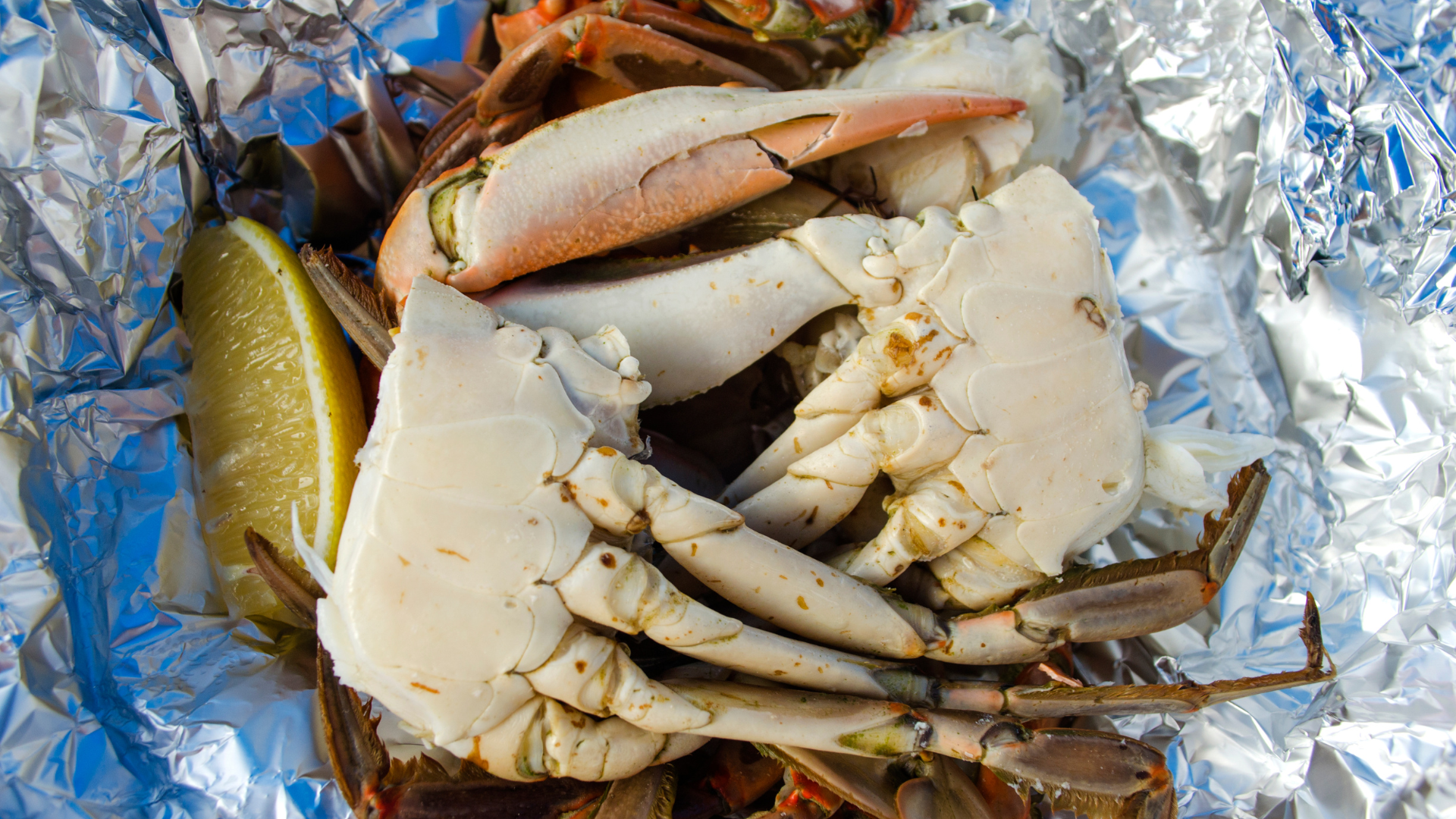
Seafood Cooking Tips
Live / whole crabs
- Steam – Classic Mid-Atlantic style with a seasoned steaming liquid and spice on top; serve piled high with mallets, paper, and plenty of napkins.
- Boil – Gulf-style boils with spices, corn, potatoes, and sausage.
- Chill or pick – After steaming or boiling, cool and pick the meat for later use.
Picked crab meat
- Crab cakes – Gently bound cakes that showcase jumbo lump; handle minimally to keep big pieces intact.
- Pastas and risottos – Fold in at the end with butter, herbs, and citrus so the meat just warms through.
- Salads and cold dishes – Serve simply with lemon, herbs, and light dressings to highlight sweetness.
- Soups and stews – Add near the end of cooking so the meat stays tender and doesn’t break down.
Whichever style you choose, avoid over-handling or over-cooking picked meat; the goal is to keep that sweet, delicate texture intact.
Want This On Your Menu or Table?
For current availability, pricing, and prep ideas, get in touch with our team. We’re happy to help you decide what will work best for your menu or home kitchen.